In-Person: Incident Safety Officer Training
The NVFC’s Incident Safety Officer (ISO) training will give students an overview of the role of an ISO and cover communications and safety, as well as the practical application of
The NVFC’s Incident Safety Officer (ISO) training will give students an overview of the role of an ISO and cover communications and safety, as well as the practical application of
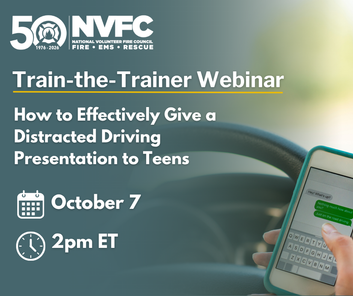
We know that distracted driving is an epidemic. As emergency responders, we see firsthand the devastating effects of distracted driving in terms of lives lost and injuries to the public,
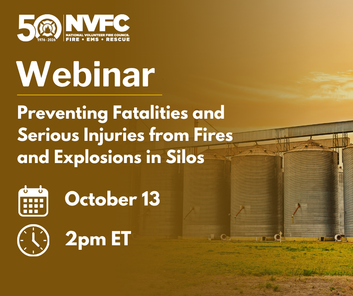
On May 15, 2026, two volunteer firefighters died following an explosion of an oxygen-limiting silo that occurred at a lumber mill. The incident was investigated by the National Institute for
Quality leadership is essential for the fire and emergency services to accomplish the mission, improve member satisfaction, and best serve the community. This course examines leadership styles, qualities, ethics, and
As the number of electric vehicles on the roadways increases, it is important for first responders to understand how a response involving these types of vehicles is different than those
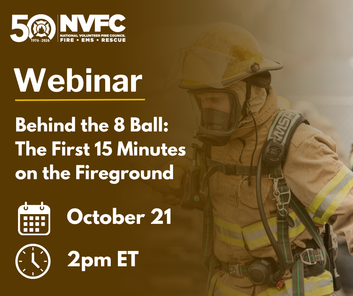
Does the term “do more with less” sound familiar? For many volunteer and combination departments, that’s a daily reality – and it matters most in the critical first minutes of
The NVFC, in partnership with the U.S. Forest Service, offers an in-person training course to teach fire service volunteers how to properly conduct safety assessments for homes located in the
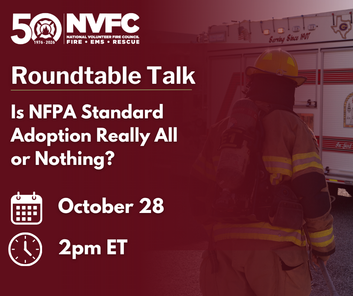
NFPA standards are meant to establish a baseline of safety and operational performance, but many departments assume adoption is an all-or-nothing decision – and that’s one of the most misunderstood

Join Dr. Candice McDonald and Chief Joel Cerny, along with guests Douglas Cline and Chief Corey Smedley, for an interactive discussion on Retention & Recruitment for Combination Departments. The session will run 30 minutes and include audience Q&A. Register
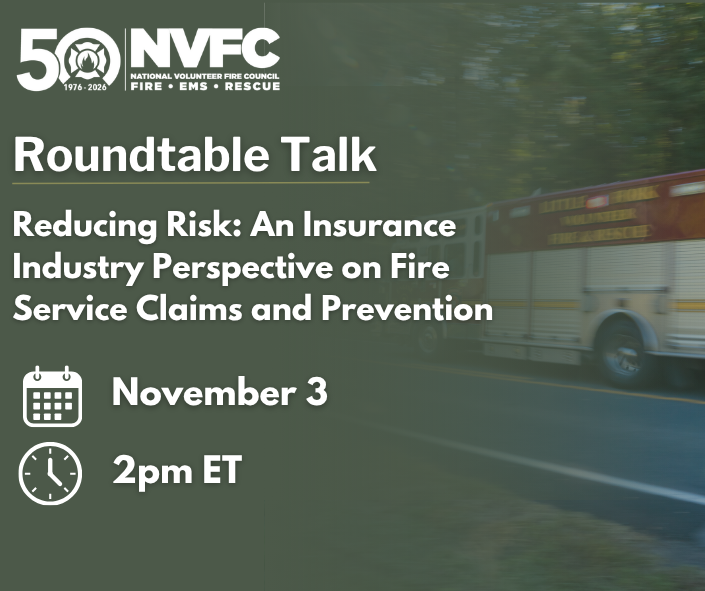
Every fire and emergency service department has a level of risk to contend with, but there are steps leaders and individuals can take to help mitigate risks and better protect




Copyright 2026 National Volunteer Fire Council