In-Person – Teaching Hazmat Basics
This course covers the foundations of teaching hazmat response and safety. Attendees will learn how to connect their hazmat training to the risks faced by the student audience. They will
Free
This course covers the foundations of teaching hazmat response and safety. Attendees will learn how to connect their hazmat training to the risks faced by the student audience. They will
As the number of electric vehicles on the roadways increases, it is important for first responders to understand how a response involving these types of vehicles is different than those
This course focuses on first responder safety by reviewing basic decontamination (decon) techniques. Attendees will learn the differences between the various levels of decontamination as well as alternate means of
Volunteer fire departments face increasing challenges delivering effective training amid limited time, budgets, and growing operational demands. This Roundtable Talk will explore common training barriers, including balancing requirements with personal
As the number of electric vehicles on the roadways increases, it is important for first responders to understand how a response involving these types of vehicles is different than those
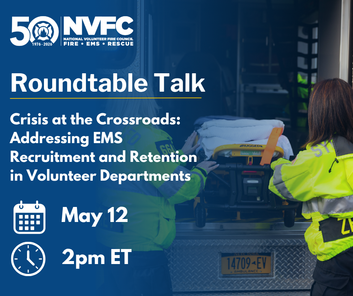
Volunteer fire and EMS departments are facing a growing crisis. Many departments struggle to recruit and retain members while call volumes – especially for medical emergencies – continue to increase.
The National Fire Incident Reporting System (NFIRS) sunset on January 31, and the National Emergency Response Information System (NERIS) is now the nation’s primary system for collecting fire incident data.
The NVFC, in partnership with the U.S. Forest Service, offers an in-person training course to teach fire service volunteers how to properly conduct safety assessments for homes located in the
The NVFC, in partnership with the U.S. Forest Service, offers an in-person training course to teach fire service volunteers how to properly conduct safety assessments for homes located in the
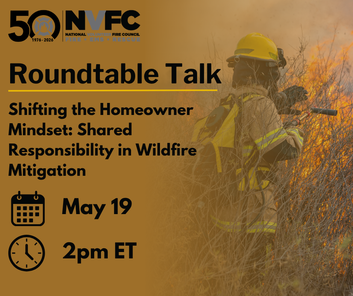
Many homeowners rely solely on the fire department to protect their property during a wildfire – but that expectation does not reflect the reality of wildfire preparedness and response. Join




Copyright 2026 National Volunteer Fire Council