In-Person – Wildland Fire Assessment Program
The Wildland Fire Assessment Program (WFAP) will teach you how to work-side-by-side with homeowners to identify threats around their property that may be susceptible to wildfires. The WFAP is a
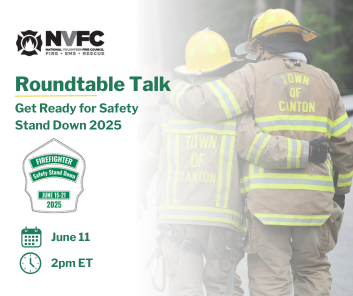
This year’s Safety Stand Down takes place June 15-21 with the theme “Break the Stigma: Behavioral Health RESET.” Fire and emergency service departments are asked to focus their training and education that week on the mental well-being of their crew and the daily topics of Recognize, Educate, Strategies, Empower, and Training. What does all this
This course reviews best practices for creating a robust training program in a volunteer fire department. You will learn how to ensure your training program produces positive outcomes, accomplishes training goals, and prepares members to run safe and effective operations. Register by emailing Steve Lauer at: stevelauer@hotmail.com This training is part of the 2025 Montana
The NVFC's signature conference is an opportunity to participate in valuable classroom training and share ideas and best practices with emergency responders from across the U.S. Attendees can choose from breakout sessions addressing key topics in three tracks: first responder health, safety and training; leadership; and recruitment and retention. Travel stipends are available.
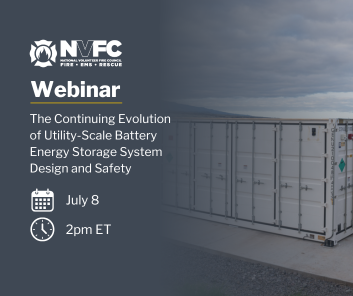
As the deployment of utility-scale battery energy storage systems (BESS) in the U.S. accelerates, it’s critical for project developers, owners, and operators to engage with local firefighters to provide detailed information about advances in BESS technology, codes and standards, safety systems, and facility design to support effective emergency planning, hazard mitigation, and incident response. This
This course covers the foundations of teaching hazmat response and safety. Attendees will learn how to connect their hazmat training to the risks faced by the student audience. They will walk away able to take a limited hazmat resource list and develop at least three practical skills trainings of direct benefit to their students. Finally,
As the number of electric vehicles on the roadways increases, it is important for first responders to understand how a response involving these types of vehicles is different than those with an internal combustion engine. This awareness and fundamentals course sponsored by General Motors will introduce first responders to hybrid and electric vehicles, share data
Unlock the full potential of community engagement with our invaluable webinar on leveraging Nextdoor for your emergency services department. Imagine having a platform where your entire neighborhood is already tuned
Many fire and EMS departments across the nation are struggling to find new volunteer members and retain their current members. This session discusses the challenges of recruiting volunteers, presents valuable