In-Person – Teaching Hazmat Basics
This course covers the foundations of teaching hazmat response and safety. Attendees will learn how to connect their hazmat training to the risks faced by the student audience. They will
The Wildland Fire Assessment Program (WFAP) will teach you how to work-side-by-side with homeowners to identify threats around their property that may be susceptible to wildfires. The WFAP is a
This course focuses on the specific techniques and knowledge required to teach others about flammable gases hazmat response. After completing the course, attendees will be able to relate the specific
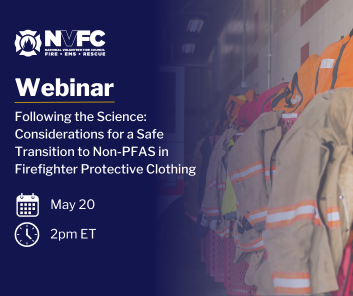
Per- and polyfluoroalkyl substances (PFAS) comprise a class of man-made toxic chemicals that have been used in thousands of consumer and industrial products and processes. There is heightened concern of its use in the fire service due to the multiple potential routes of exposure that firefighters experience. PFAS-based materials have been used in firefighter gear
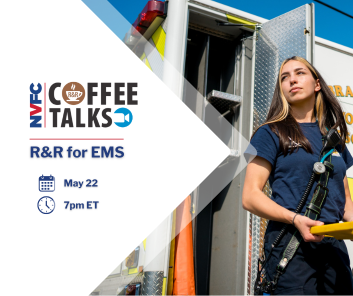
Join Dr. Candice McDonald and Chief Joel Cerny, along with guests Marv Trimble and Steve Marsar, for an interactive discussion on R&R for EMS. The session will run 30 minutes
Many fire and EMS departments across the nation are struggling to find new volunteer members and retain their current members. This session discusses the challenges of recruiting volunteers, presents valuable research collected as part of the NVFC’s Make Me A Firefighter campaign, and offers ideas to help overcome recruiting challenges. Potential retention solutions and the
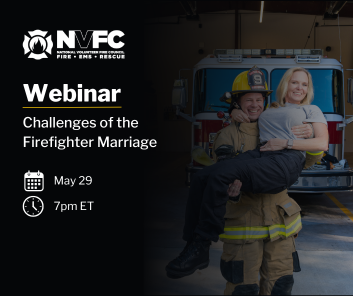
When someone becomes a volunteer firefighter, it impacts the whole family. Spouses, in particular, will be there to support their loved one while keeping things on track at home. In
As the number of electric vehicles on the roadways increases, it is important for first responders to understand how a response involving these types of vehicles is different than those
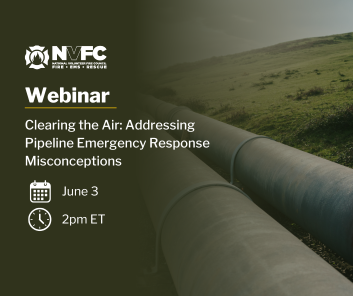
When a pipeline incident occurs, communication and coordination between a utility or pipeline operator and emergency response agency is critical. But lurking is a laundry list of myths that both
As the number of electric vehicles on the roadways increases, it is important for first responders to understand how a response involving these types of vehicles is different than those