In-Person – Wildland Fire Assessment Program (WFAP)
The NVFC, in partnership with the U.S. Forest Service, offers an in-person training course to teach fire service volunteers how to properly conduct safety assessments for homes located in the
Incident Safety Officer Training: The NVFC’s Incident Safety Officer (ISO) training will give students an overview of the role of an ISO and cover communications and safety, as well as
Leadership for the Fire and Emergency Services: Quality leadership is essential for the fire and emergency services to accomplish the mission, improve member satisfaction, and best serve the community. This
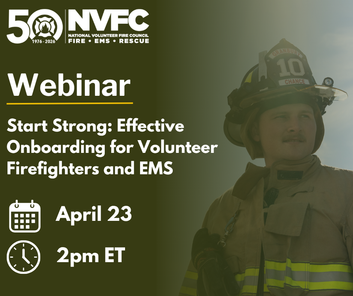
Onboarding volunteer firefighters and EMS providers comes with unique challenges, including limited time, staffing, and resources. Without a structured process in place, departments risk losing new volunteers before they ever
As the number of electric vehicles on the roadways increases, it is important for first responders to understand how a response involving these types of vehicles is different than those
As the number of electric vehicles on the roadways increases, it is important for first responders to understand how a response involving these types of vehicles is different than those with an internal combustion engine. This awareness and fundamentals course will introduce first responders to hybrid and electric vehicles, share data and resources, and equip
This course focuses on the specific techniques and knowledge required to teach others about flammable gases hazmat response. After completing the course, attendees will be able to relate the specific regional applications of the product and key response considerations; describe specific chemical properties of the product to their students; and transfer key strategies and tactics
This course covers the foundations of teaching hazmat response and safety. Attendees will learn how to connect their hazmat training to the risks faced by the student audience. They will walk away able to take a limited hazmat resource list and develop at least three practical skills trainings of direct benefit to their students. Finally,
As the number of electric vehicles on the roadways increases, it is important for first responders to understand how a response involving these types of vehicles is different than those with an internal combustion engine. This awareness and fundamentals course will introduce first responders to hybrid and electric vehicles, share data and resources, and equip
This course focuses on first responder safety by reviewing basic decontamination (decon) techniques. Attendees will learn the differences between the various levels of decontamination as well as alternate means of decontamination and how to set up a one-hour drill/exercise in their jurisdiction. Keeping the focus on safety, attendees will discuss how to utilize a safety