In-Person NVFC Trainings
Fit for Duty, Fit for Life: Firefighter Physicals and the Volunteer Fire Service (2 hours) Firefighters do a dangerous job and face many risks. To mitigate these risks, firefighters should
Battery Energy Storage System (BESS) facilities have become one of the fastest-growing energy infrastructure development trends across the country. Many of these systems are operating or will be built in
This course focuses on first responder safety by reviewing basic decontamination (decon) techniques. Attendees will learn the differences between the various levels of decontamination as well as alternate means of
As the number of electric vehicles on the roadways increases, it is important for first responders to understand how a response involving these types of vehicles is different than those
Join this NVFC webinar to learn how fire departments can build training and lesson plans tailored to their own communities using Community Risk Reduction (CRR) principles. This session will cover
Sound Off with the Home Fire Safety Patrol is a proven fire safety education and risk reduction program for young children and their families. Funded through a series of Fire
Join Dr. Candice McDonald and Chief Joel Cerny, along with guests Sheri Nickel and Meredith Herman, for an interactive discussion on Fire Prevention Week & Recruitment. The session will run
This course from the National Volunteer Fire Council and the American Psychological Association's Center for Organizational Excellence is designed to empower fire department leadership to promote and support healthy, high-performing
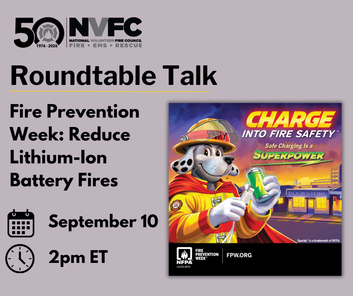
Fire Prevention Week is October 4 – 10, 2026. This year’s theme – “Charge Into Fire Safety ™. Safe Charging is a Superpower” – focuses on the everyday charging habits
As the number of electric vehicles on the roadways increases, it is important for first responders to understand how a response involving these types of vehicles is different than those