The Kitchen Table Test: What Prospective Volunteers Notice First
March 24, 2026
By Walter A. Campbell
 Volunteer fire and EMS departments across the country share the same recruitment challenge: attracting new members and keeping them engaged. For many departments, the question is no longer whether recruitment is difficult, but what actually influences someone to decide to join.
Departments post on social media, attend community events, and promote volunteer opportunities. These efforts help create awareness.
But one of the most important recruitment moments rarely happens at a public event or through a marketing campaign. It happens the first time a prospective volunteer walks into the station.
The Kitchen Table Test
When someone visits a firehouse for the first time, they may think they are there to learn about training requirements, equipment, or response expectations. In reality, they are evaluating something else. They are reading the room.
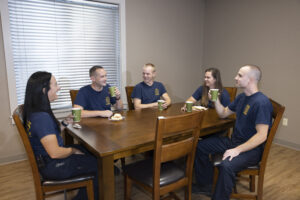
In many firehouses, the kitchen table sits at the center of daily activity. Members gather there between calls, discuss training, share meals, and build relationships.
For a prospective volunteer, what happens around that table often says more about the department than any recruitment flyer or social media post. Do members greet them when they walk in? Does someone introduce themselves and offer a tour? Does someone invite them to sit down and join the conversation?
Or do conversations continue while the visitor stands quietly, unsure where they fit in?
Within minutes, a prospective volunteer begins forming an impression of what it might feel like to be part of the team. I often refer to this moment as the Kitchen Table Test.
I have seen prospective volunteers decide whether they belong in a department within the first 10 minutes of a station visit, often before anyone realizes it.
Culture Speaks Louder Than Messaging
Departments often treat recruitment as a marketing problem. Marketing helps people learn about volunteer opportunities, but it does not convert interest into commitment. Culture does.
Prospective volunteers pay attention to how members interact with each other and with guests. They notice whether the environment feels welcoming, respectful, and supportive. Most people considering volunteer service are not only looking for a place to run calls. They are looking for purpose, teamwork, and belonging.
When a department’s culture reflects those values, people notice. When it does not, they notice that too. In many ways, the fire department’s recruitment culture determines whether people choose to join.
Small Actions Shape First Impressions
Passing the Kitchen Table Test does not require a complex recruitment strategy. In many departments, it comes down to the everyday behaviors members show when someone new walks through the door.
- Introduce yourself when someone new arrives.
- Offer to show them around the station.
- Ask what sparked their interest in volunteering.
- Invite them to join the conversation.
These gestures communicate that people matter in the department. When prospective volunteers feel welcomed and included, they begin to picture themselves as part of the team.
Recruitment Is a Department Responsibility
Many departments assign recruitment to a committee or officer. Those roles are important, but recruitment happens throughout the station. Every member influences the visitor experience.
The way members talk to each other, the pride they show in their service, and the effort they make to include new people all affect whether someone decides to move forward. Station culture becomes visible in everyday interactions. That culture often determines whether a prospective volunteer returns.
Departments that consistently attract new volunteers often focus on strengthening their internal culture as much as their external recruitment efforts. Creating a welcoming environment is one of the most powerful recruitment tools any department has.
Continuing the Conversation
Recruitment and culture remain ongoing challenges for volunteer departments. Many of these ideas will be explored further at the 2026 NVFC Training Summit, June 26–27 in Arlington, VA.
I will be leading a session titled Finding the Why: Passion-Driven Recruitment for Fire & EMS Volunteers, where we will take a deeper look at how departments can better understand what motivates people to serve. If you plan to attend the Summit, I hope you will join the conversation.
More information about the event, registration, and available stipends can be found at www.nvfc.org/summit.
Recruitment does not start with an application. For many volunteers, the decision begins with their first visit to the station and what they experience around the kitchen table.
Walter A. Campbell works with fire and EMS departments nationwide to strengthen volunteer recruitment and retention through practical strategies that help departments attract and engage committed members. He will be teaching Finding the Why: Passion-Driven Recruitment for Fire & EMS Volunteers at the 2026 NVFC Training Summit.