The Wildland Fire Assessment Program (WFAP) will teach you how to work-side-by-side with homeowners to identify threats around their property that may be susceptible to wildfires. The WFAP is a joint effort between the National Volunteer Fire Council and the U.S. Forest Service to prepare fire department members with the necessary information, skills, and resources
Calendar of Events
|
Sunday
|
Monday
|
Tuesday
|
Wednesday
|
Thursday
|
Friday
|
Saturday
|
|---|---|---|---|---|---|---|
|
0 events,
|
0 events,
|
0 events,
|
0 events,
|
0 events,
|
0 events,
|
1 event,
-
Free
|
|
0 events,
|
0 events,
|
0 events,
|
0 events,
|
0 events,
|
0 events,
|
0 events,
|
|
0 events,
|
0 events,
|
0 events,
|
0 events,
|
0 events,
|
0 events,
|
0 events,
|
|
0 events,
|
0 events,
|
0 events,
|
0 events,
|
1 event,
-
You’ve probably heard of the importance of work-life balance – but what about work-life-volunteer balance? Keeping two plates spinning is hard enough without adding the demands of a high-commitment volunteer role like being a volunteer first responder. April is National Stress Awareness Month, and the NVFC is hosting a Roundtable Talk with a panel of
Free
|
1 event,
-
This course focuses on the different types and scopes of scenarios that can be used in hazmat training. Attendees will learn the various student learning styles and how to use scenarios to bridge gaps in learning retention. The course will cover the concept of all hazards planning and how to engage key response stakeholders in |
4 events,
-
This course focuses on cargo tank regulations and standards, including NFPA 470 and 49 CFR regulations as they relate to cargo tanks, especially the MC-306/DOT-306. Attendees will learn how to teach others about the various types of bulk cargo tanks used in the transport and handling of hazardous materials. They will walk away with an
-
This course focuses on the specific techniques and knowledge required to teach others about methanol hazmat response. After completing the course, attendees will be able to relate the specific regional applications of the product and key response considerations; describe specific chemical properties of the product to their students; and transfer key strategies and tactics to
-
Teaching hazmat to your responders doesn’t have to be a costly undertaking. In this course, attendees will learn how to identify the key components of a hazmat training budget, including direct/indirect cost planning and using a risk-based needs assessment, and then determine how to align goals with their budget. In addition, attendees will learn how |
|
0 events,
|
0 events,
|
0 events,
|
0 events,
|
1 event,
-
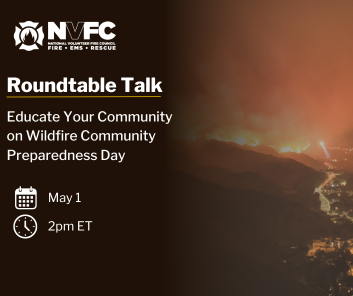
Wildfire Community Preparedness Day (WCPD) is a campaign that encourages people and organizations everywhere to come together on a single day to take action to raise awareness and reduce wildfire risks. The theme for this year's WCPD, taking place on Saturday, May 3, is Defending the Home Ignition Zone (HIZ). Join this NVFC Roundtable Talk
Free
|
0 events,
|
2 events,
-
Many fire and EMS departments across the nation are struggling to find new volunteer members and retain their current members. This session discusses the challenges of recruiting volunteers, presents valuable research collected as part of the NVFC’s Make Me A Firefighter campaign, and offers ideas to help overcome recruiting challenges. Potential retention solutions and the
-
This course covers the foundations of teaching hazmat response and safety. Attendees will learn how to connect their hazmat training to the risks faced by the student audience. They will walk away able to take a limited hazmat resource list and develop at least three practical skills trainings of direct benefit to their students. Finally,
Free
|